Reverb vs Delay- getting a good amplified sound for violin, viola, or cello

300x200notext

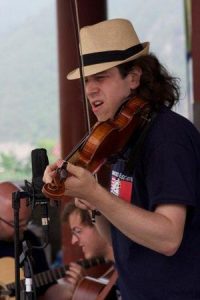
A great young creative violin player  named Rob Flax (he’s also an alumni of my annual Creative Strings Workshop) recently sent me his audition tapes for grad school to get my feedback, and one of the first things I noticed was that, although the violin was loud enough in the context of the jazz combo, it didn’t have the depth of sound that I  know he creates when he plays acoustically. I think this was largely attributable to the fact that his sound was “dry”, i.e., lacking reverb. Although Rob delves into everything from straight ahead jazz to fusion, free jazz,  rock, and fiddle styles like bluegrass, his tape was mostly acoustic and straight ahead.
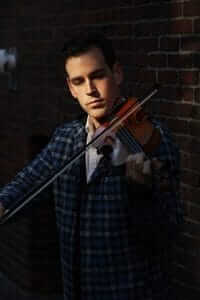
Rob Flax

Rob Flax

The obvious question from Rob to me: What’s a good way to get the reverb I need? An amp or a pedal? Any tips from your own experimenting?

My answer: It depends. Some amps have good reverbs, some pedals have good reverbs, and sometimes you’ll want to rely on the p.a. (when you have one with a soundman you trust) for reverb.

I like the Boss ME-50, which is one big pedal that has most or all of the effects I need including volume pedal, octave, chorus, wah, distortion/overdrive, etc… (thanks to awesome jazz violinist, Zach Brock, for hipping me to this pedal a few years ago when he came to the workshop), although admittedly the reverb in the unit isn’t necessarily that special. Usually I’ll opt for the reverb in my amp. (For more customized help with sound issues related to amplifying strings, you might try getting in touch with Blaise and his team at the Electric Violin Shop I know they spend a lot of time on the phone giving string players advice about gear and sound.)
I suggest that in order to attune your ears to nuances in reverb (there are many levels which won’t be clear to you at first), you simply experiment with using lot’s of reverb, and then a little, and this way you’ll start to hone in on the right amount.

The standard thought seems to be that reverb is sufficient for straight ahead jazz and/or other “acoustic” music, although this isn’t a hard and fast rule. Experiment with delays too and see if you like them. I usually don’t use delay when I’m playing straight ahead, although I do use delay in other contexts. There are three parameters within the delay effect that makes it slightly more complicated to get right than a typical reverb setting. More on delays later.

Anyone have anything they want to add? Feel free to comment.
Share
  • jamg53

    My reverb tank (a Kendrick copy of a classic Fender tube reverb unit) is in the shop right now, but while it's gone I've been enjoying using an MXR Carbon Copy delay unit- with each of the three knobs just barely turned on- gives a nice reverb like effect for my electric guitar. Of course, a Fulltone tape delay machine would sound even better, but they're much more expensive. Anyway- the delay turned down low gives a nice a reverb effect to my ear….Jim

  • zachbrock

    Thanks for the shout-out Chris!

    Reverb/delay is always a tough call that requires serious consideration because it has such an effect on the way the listener experiences your sound. Is the reverb or delay actually an integral part of your sound/tone (processed) or do you just want to add space/depth to your instrument (acoustic)?

    Whether we like it or not, sometimes the style of music we are playing can heavily influence our choice (blessing in disguise?). For instance, it might seem musically incongruous to use a wet-mixed delay on a recording with an acoustic jazz piano trio while, at the same time, a simple hall reverb might not be “epic” enough if you are playing with a loud electric band with lot's of synths, electric guitars, etc. Of course, your thing might be to consciously create this incongruity. That can be cool too…

    Another consideration is how malleable do you want your sound to be within any given musical context, or, do you want to change your sound to fit the conventions of a certain style? I notice that some of my favorite players like John Scofield or Ben Monder have different tonal concepts (and different reverbs/delays) depending on whether they are playing acoustic or electric, while others such as Mark Feldman or Chris Potter have a more singular sound for all musical situations. They have all found a way to make it work for them.

    My last thoughts on this topic would be for those of you who are new to this: start thinking about this reveb/delay question from the perspective of a listener (i.e. not just as the performer). Pick ten of your favorite recordings, grab a notebook and pencil, and make specific descriptive notes on the sound processing of whichever player you would most like to emulate. Don't worry about not knowing exactly what is being done to the sound. Go for the big picture. You will probably find yourself gravitating towards a more personal choice already After thinking about reverb and delay in this way, you will be able to solicit more specific advice from fellow players, teachers, and recording engineers.

    Thanks for the interesting and valuable forum Chris!

  • http://twitter.com/christianhowes christian howes

    #zachbrock- Excellent points about achieving “your” sound
    thanks