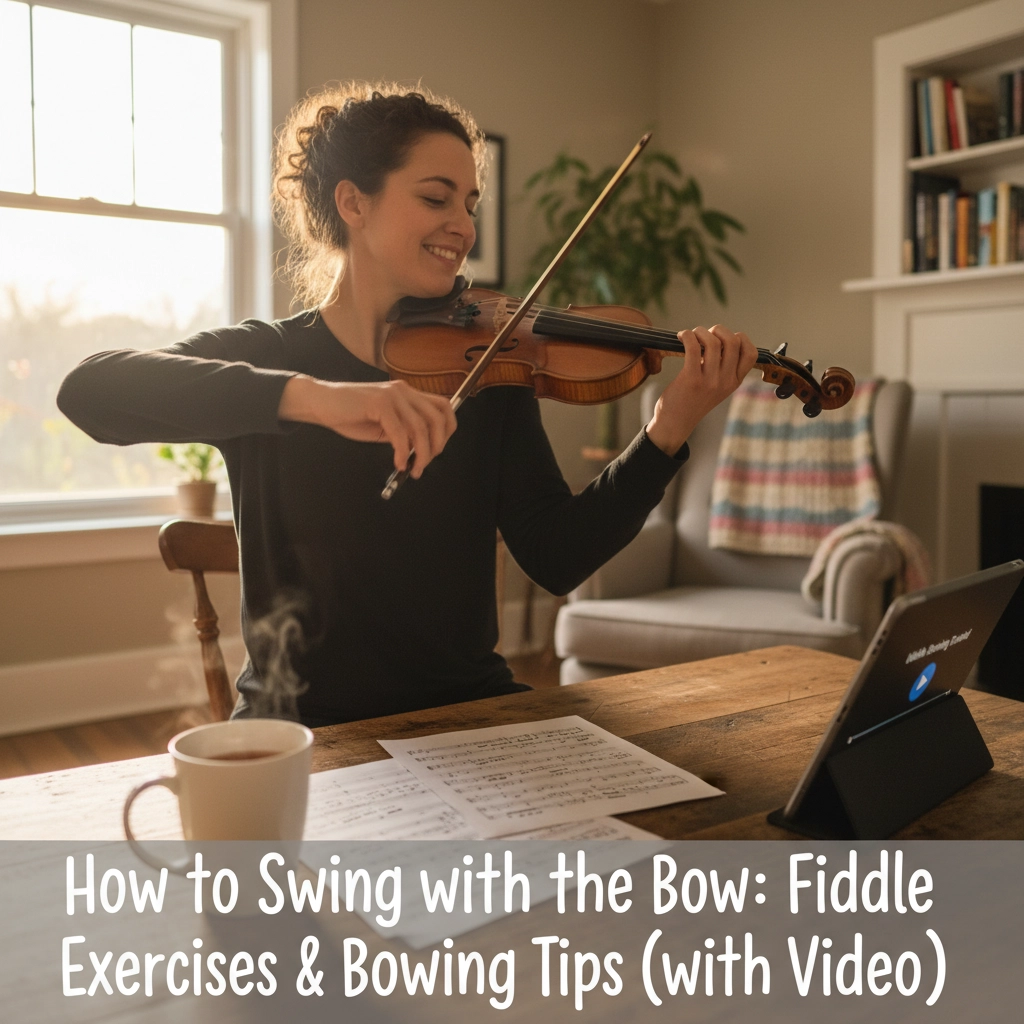
So which is it: the bowing, the articulation, the phrasing, or the timing?
Yes.
Listening, adjusting bowings, and analyzing phrasing and articulation are all helpful in developing your own approach to playing swing feel with a bow. And depending on the tempo, everything can change.
Whether you’re coming from a classical background or diving straight into eclectic styles, studying swing can transform how you approach rhythm and musical expression. Grab your bow and let’s dive in.
Play-Along Playlist: How to Play Swing on Violin or Any Bowed Instrument
Use the arrows on the side of the video frame to switch videos. This playlist includes all three videos in the series. Below is a description of each video. Grab your instrument and play along!
Table of Contents
Video 1 — Interactive Play-Along: How to Play Swing on Violin
Play with me! Play swing on violin with this interactive play-along video — perfect for violinists and any bowed instrument players! Whether you’re a beginner or intermediate player, this tutorial walks you through essential bowing techniques with a simple pattern in the G major scale.
- You’ll discover different bowing combinations and have a chance to play back along with the demo sections to hear how swing should sound. This is a powerful way to internalize the feel and groove of swing!
- Perfect for: violinists, violists, cellists, or anyone looking to explore jazz swing styles on bowed strings.
Video 2 — Call-and-Response Melodies (Play Easy Short Melodies Back to Me)
Play with me! Play swing on violin with this interactive play-along focused on simple, short phrases. Whether you’re just starting or getting back into it, we’ll reinforce bowing combinations, timing, and feel.
- You’ll also play easy short melodies back to me so you can check your time, articulation, and swing feel in real time.
- Perfect for: violin, viola, and cello — fun for all levels.
Video 3 — Chromatic Exercise + Extended Voicings for Swing Strings
Play with me! We’ll dig into a chromatic exercise to strengthen your ears and fingers, then apply extended voicings so your swing lines sound rich and authentic on violin, viola, cello, or any instrument.
- Learn how to connect guide tones with chromatic approach notes and outline extended harmonies while keeping the groove.
- Great for: building jazz vocabulary, improving intonation, and unlocking voice leading across positions.
What Makes Swing Bowing So Special?
Swing bowing is a rhythmic conversation that makes people tap their feet and smile. You’re not only playing notes; you’re shaping time, accents, and space within many possibilities of each phrase and sub-phrase (which is similar to how we approach Bach or fiddle tunes, or melodies in any style for that matter.).
In this series we bring together:
- timing and feel
- bowings: hooks, slurs, bite, on-the-string articulation
- hearing/internalizing swing through play-alongs
- voice leading and guide tones
- chromaticism and approach tones
- call-and-response phrasing
- and more
The Foundation: Understanding Swing Feel
Swing isn’t just “long–short” eighths — it’s a steady pulse with subtle placement. Your bow is both rhythm and melody.
- Feel the backbeat: count 1-2-3-4, but feel 2 and 4.
- Shape notes: some strokes lean forward, others lay back. That ebb-and-flow = swing.
- Ask yourself: where do I want this note to land — ahead, behind, or right on the beat? There’s not necessarily one right answer. Some people feel time ahead, in the middle, or in front of the beat. On this medium/slow tempo groove featured in the video I suppose I tend to lay back behind the beat.
Essential Swing Bowing Patterns
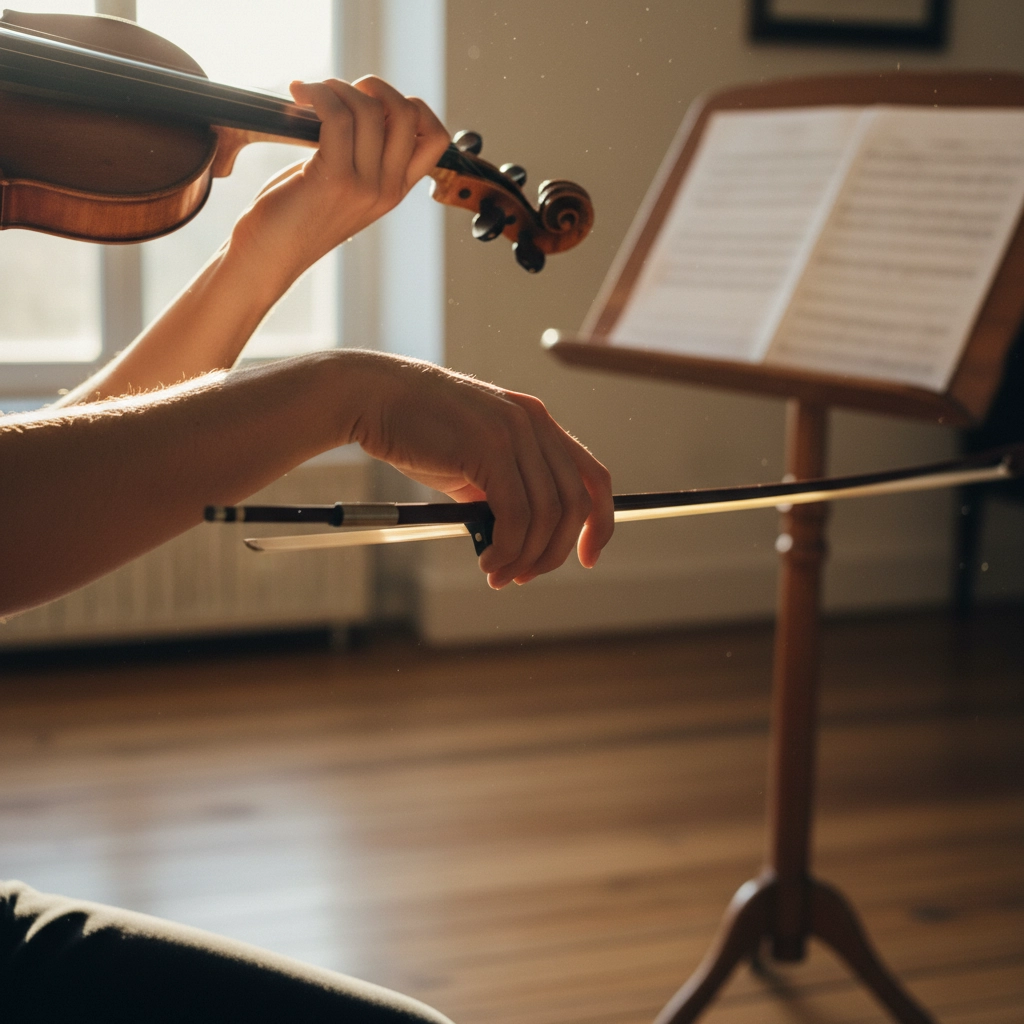
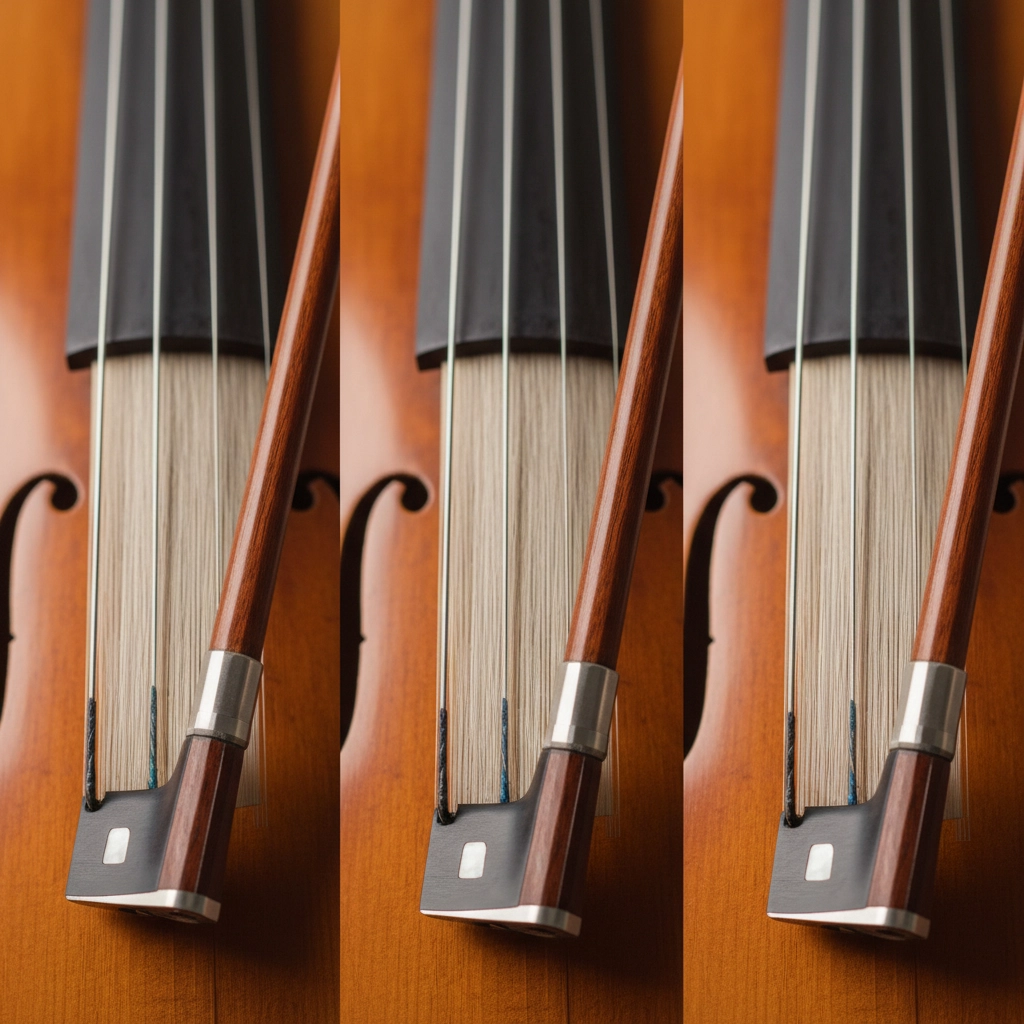
- Keep the bow on the string).
- Separate, slur 2,4, 6, or 8
- bite: add a touch of index-finger weight at note starts.
- Off-beat ties: let the bow connect across the bar
Play along with the playlist and copy the articulation.
Mastering the Technical Elements
Improvising Bowings
Practice repetitive bow patterns, then improvise with the bow to make them musical.
Experiment with playing ahead, behind, and in the center of the beat using different contact points. This creates natural ebb and flow that keeps your phrases alive.
Instead of lifting the bow often, follow the videos: stay on the string, use hooks and slurs, and adjust based on tempo. Play along with Video 1 to lock in bowing, Video 2 for call-and-response melodies, and Video 3 to connect chromatic lines and extended voice-leading with clean articulation.
Common Mistakes That Kill Your Swing
The Rigid Rhythm Trap
Great swing breathes. Ask: Does this phrase feel good?
Avoid:
- mechanical, even accents on every 8th
- lifting the bow when it’s not necessary
Fix it fast:
- copy the phrasing in the playlist
- record yourself and listen back
Essential Practice Exercises
The Metronome Is Your Friend (Sometimes)
Use a metronome to learn patterns, then turn it off and play with humans. Try:
- click on 2 and 4 only
- click on 1 and 3
- no click
Benefits for Both Classical and Jazz Players
For Classical Musicians
If you’re coming from a classical background, learning how to play swing on violin will transform your phrasing and timing. You’ll think beyond notes and into feel, articulation, and placement — skills that boost your classical playing too.
For Jazz and Fiddle Players
These bowing patterns are essential for authentic swing. Without solid articulation and time, even great note choices fall flat. Nail the feel, then layer in licks and lines with confidence.
Taking Your Skills Further
Want real-time feedback and community support? Join our live Zoom classes inside Creative Strings Academy:
- Weekly Zoom sessions and replays
- all levels and instruments welcome
- Supportive community and structured guidance
Join here: https://christianhowes.com/csa/
Grab our free directory of 500+ human play-along videos to supercharge your practice:
free play-along video directory