
Get a better fiddle sound, learn tunes by ear, understand chords, and feel more comfortable making music with other people.
Get your fiddle out and choose one thing you would like to improve. These free lessons give you something to play along with, plus a small practice idea you can use today.
For fiddlers and violinists who already play a little—including classical players exploring fiddle styles. Start with a comfortable exercise, pause when you need to, and take your time.
Learn fiddle tunes by ear, one phrase at a time
Start with this Easy Bluegrass Fiddle Lesson. Listen, play it back, and repeat before moving on. You can pause as often as you need.
Try this: Listen to one phrase, hum it, and try it on your fiddle. If you catch only part of it, start there and build.
Open the lesson on YouTube · Also try: Angeline the Baker, learned by ear
Fiddle technique: get a clearer, more reliable sound
A scratchy sound or an accidental extra string can interrupt a phrase you already know. Work on the start of each bow stroke, steady string changes, and a sound you can repeat.
How to Get a Better Fiddle Sound | Bow Control Exercises
15:06 · For players who want a more consistent sound
Try this: Repeat one opening exercise slowly. Listen to how each note begins, and keep the adjustment that improves your sound without adding tension.
Fiddle bowing and rhythm: make your phrases groove
Shuffle bowing gives a phrase its shape and drive. Learn a pattern, feel its pulse, and try variations so you can use it in a tune.
How to Play Fiddle Shuffle Bowing | Play Along Lesson
14:04 · Start on an open string, then add notes
Try this: Copy one rhythm on a single note. When it feels steady, use it on a short phrase you already know.
Put the bowing into short fiddle phrases
Play these short phrases after me. Keep listening to the rhythm and the way each phrase connects. Pause and repeat whenever you need to.
Jamming: listen, join in, and leave space
Playing with others involves keeping the pulse, responding, and knowing when to leave room. Use this Blues in E play-along to practice joining in without playing constantly.
Try this: Listen first. Play a short response, then leave a gap while you keep feeling the beat. At a live jam, ask about its traditions and expectations before joining in.
Open the blues lesson on YouTube · Read the jam session etiquette guide
Try another feel: Soulful Fiddle in A
Copy a phrase, notice its shape, and give yourself time to answer. Try carrying the same listening-and-response practice into this soulful bluegrass setting.
Fiddle harmony: hear the chords underneath the melody
Understanding the harmony helps you find notes that fit, play a simple accompaniment, and make choices when the melody stops. Start with the chord progression to Saint Anne’s Reel.
How to Play All Parts of a Fiddle Tune
37:21 · Take this longer lesson in short sections
Try this: Follow the chord changes, then try one note from each chord. Keep the rhythm simple enough that you can listen to how your note fits.
Fiddle improvisation: make a familiar song your own
You can begin improvising by changing a phrase you can already play. Try a different rhythm, a little space, or a new ending. This Wagon Wheel lesson lets you move between copying and creating.
Wagon Wheel Fiddle Lesson | Improvise Your Own Solo
13:10 · Guided play-after-me practice
Try this: Copy one phrase, then change just one part. Repeat your version so it becomes a choice you can make on purpose.
See fiddle technique in a real coaching session
Watch how we work on bow control and relaxation with a student. Listen for a useful adjustment you can try in your own practice.
Make one lesson useful today
Choose one skill and one exercise. Play along, pause, and repeat. Then try the same idea in a tune you enjoy. You do not have to finish every video to get something useful from this page.
More free fiddle resources
- Play Along Directory: lessons by style and level
- Angeline the Baker: learn by ear with a backing track
- Country and Bluegrass Fiddle Licks with Justin Branum
- Explore left-hand technique
Keep learning in the way that fits you
A focused course: Wagon Wheel
Use a familiar song to connect chords, pentatonic improvisation, and creative playing. Explore the Wagon Wheel course.
Ongoing practice and support: Creative Strings Academy
Develop your musicianship with lessons and the Academy community. Explore Creative Strings Academy.
A fiddle camp experience: Asheville
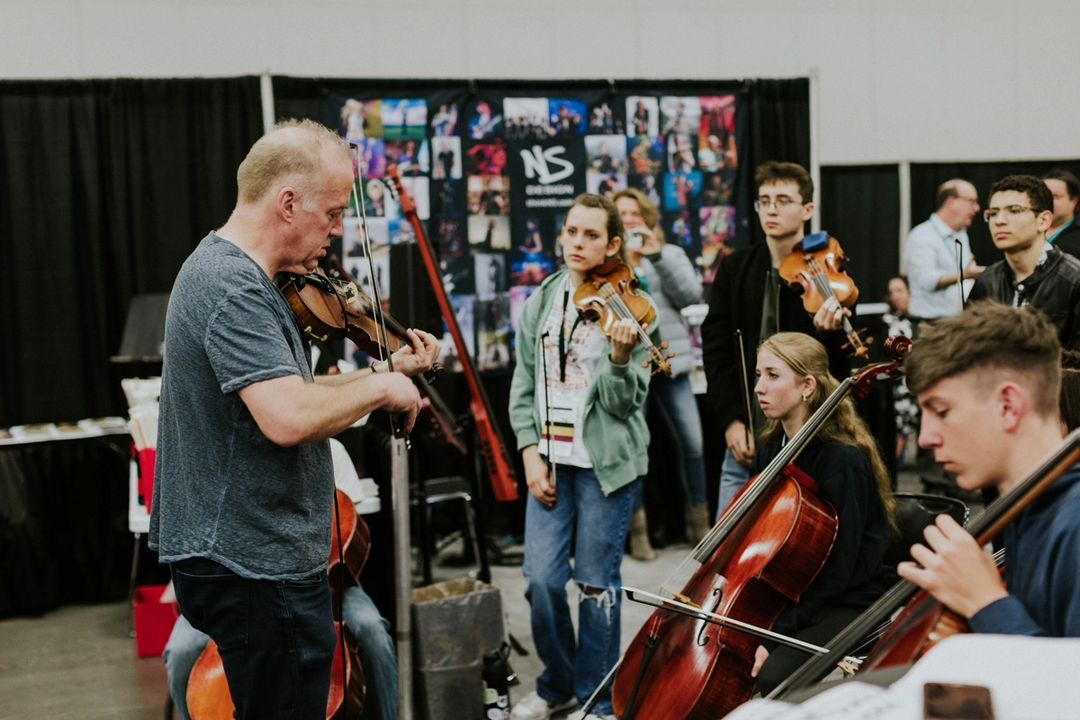
Learn, play, and jam in person at the Creative Strings Workshop, with fiddle and other styles. Explore the Asheville workshop.
Where should I start?
I play classical violin. Are these lessons for me?
Yes. You can use skills you already have while practicing things that may be less familiar: learning by ear, playing from chords, phrasing in different styles, and improvising.
I am completely new to the instrument. Can I start here?
The easier play-alongs can help once you can hold the instrument and bow, tune, and play a few notes. If you need help with that setup, a teacher can give you a more comfortable starting point.
Are these lessons free?
The videos on this page are free to watch. Courses, Academy membership, and the in-person workshop are separate paid options.
Hear the ideas in a fiddle tune
A tune can become a place to use your sound, rhythm, harmony, and creative choices. Here is Big Sciota, played with a loop pedal.